
A series of blasts took place in Srinagar city as the security agencies brought down a drone that was seen hovering over Batwara area of the city, close to an army installation, officials said.
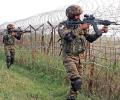
This marked the sixth consecutive night of ceasefire violations by Pakistan along the LoC, amidst heightened tensions between New Delhi and Islamabad following a recent terror attack in Pahalgam on April 22.
In response to a question on President Donald Trump offering to "mediate" on the issue of Kashmir, Bruce said, "Well, I - obviously, I can't speak to what's on the mind or the plans of the President. What I do know is that I think we all recognise that President Trump in each step that he takes, it's made to solve generational differences between countries, generational war."

Official confirmation from the government is still awaited, and more details are expected soon.
Pakistani troops continued unprovoked small arms firing in different sectors along the Line of Control (LoC) in Jammu and Kashmir for the 10th consecutive night, prompting effective retaliation by the Indian army. The ceasefire violations, which started after the April 22 terror attack in Pahalgam, were reported from eight places across five districts in the Union Territory during the intervening night of Saturday and Sunday. Indian Army responded promptly and proportionately to the unprovoked firing, a defence spokesperson said.

The encounter broke out when a joint search party of the army and police launched a search operation, based on a specific intelligence, in remote Bihali area of Basantgarh in the district this morning. Reinforcements have been rushed in and a massive search operation is going on despite bad weather.

On Saturday, May 24, 2025 Rahul Gandhi -- leader of the Opposition in the Lok Sabha -- arrived in Jammu and Kashmir's Poonch district to meet the victims of Pakistan's relentless shelling last fortnight.

The Congress party also called for a special session of Parliament to evaluate the situation in detail, to identify any mistakes that were made, and to ensure that they are not repeated in the future.
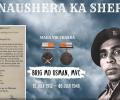
The Pakistanis were so fearful of Brigadier Mohammad Usman, the 'Lion of Naushera', that they announced a Rs 50,000 bounty on his head.

The Indian Army effectively repulsed multiple drone attacks and other munitions launched by Pakistan's armed forces along the western border on the intervening night of May 8-9. Pakistan also violated ceasefire along the Line of Control in Jammu and Kashmir. The Indian Army said it responded with force, asserting that all nefarious designs will be countered.

Long denied the right to vote, members of the Valmiki community exercised their franchise for the first time in the Jammu and Kashmir assembly elections on Tuesday and termed it as a "historic moment".
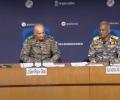
India's robust air defence system effectively thwarted Pakistani attempts to target Indian installations.
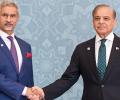
Addressing a special 'Youm-e-Tashakur' event at the Pakistan Monument in Islamabad, Shehbaz said that India and Pakistan fought three wars and got nothing.
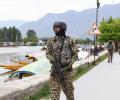
'It was inspired by the Hamas attack and was like their attack -- well planned and well executed.'
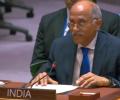
India has slammed Pakistan at the United Nations, accusing the country of illegally occupying the territory of Jammu and Kashmir and demanding its immediate vacation. India's Permanent Representative to the UN, Ambassador Parvathaneni Harish, made these remarks during a UN Security Council Open Debate on Advancing Adaptability in UN Peace Operations. He asserted that Jammu and Kashmir was, is, and will always be an integral part of India. Harish's statement came after Pakistan raised the issue of Jammu and Kashmir during the UNSC open debate, prompting a strong retort from India. He further stated that Pakistan's repeated references to the issue neither validate their illegal claims nor justify their state-sponsored cross-border terrorism. India, however, said it will refrain from exercising a more elaborate Right of Reply, suggesting a measured approach to the situation. Relations between India and Pakistan have been strained since India abrogated Article 370 of the Constitution in 2019, revoking Jammu and Kashmir's special status.
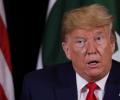
Pakistan's Ambassador to the US, Rizwan Saeed Sheikh, has urged President Donald Trump to help ease tensions with India, highlighting the Kashmir issue as a "flash point" in nuclear terms. He believes that the US should take a more comprehensive and sustained approach to address the situation rather than just immediate de-escalatory measures.

The Indus Waters Treaty, brokered by the World Bank, has governed the use of the Indus River and its tributaries between India and Pakistan since 1960.
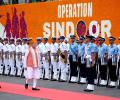
The bilingual -- Hindi and English -- invitation cards for I-Day anniversary celebrations carry this image on the top right corner of the invite, while the silhouetted image of the Chenab bridge, the world's tallest railway arch bridge, sits at the lower side of the cards, which have largely being issued online via 'Aamantran' website of the Ministry of Defence.
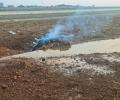
Dar's statement, echoed by another federal minister, came as the Indian and Pakistani militaries targeted each other's installations using missiles in the last more than 12 hours, further escalating the already tense conflict situation.

Banks have tightened their cyber security network to ward off any cyber threat in the wake of India launching missile attacks on Pakistan and Pakistan-occupied Kashmir. Banks have also improved their security at the branches near border areas due to heightened threat of a counter attack.
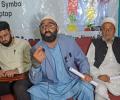
'We want to ensure that no government in J&K will be formed without our support.'
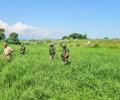
'Why have we failed to address the issue of ensuring a requisite buffer zone in J&K, given that cross-border links of some J&K politicians are known?', asks Lieutenant General Prakash Katoch (retd).

The Pakistan Army continued shelling along the Line of Control (LoC) in four sectors of Jammu and Kashmir, prompting a befitting response by the Indian Army, officials said on Thursday. The intensity of cross-border firing was less than Wednesday, when Pakistan Army carried out one of the most intense artillery and mortar shelling in years targeting the forward villages in J-K following missile strikes by India as part of 'Operation Sindoor'.

The Indian Army responded in a measured and effective manner to the provocation.

'We've moved from thousands killed yearly in Jammu and Kashmir to 127 last year.' 'Cross-border terrorism in Kashmir is being solved. We are winning it.'
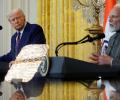
US President Donald Trump said on Friday that there has always been tension between India and Pakistan and the two countries will figure it out between themselves. Trump was asked about tensions between India and Pakistan in the wake of the Pahalgam terror attack, in which 26 civilians were killed, and if he would be talking to the leaders of the two nations. He said that he knows both leaders and that there is great tension between Pakistan and India, but there always has been.
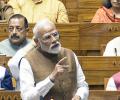
What was the aim of Operation Sindoor? Why was the operation halted so soon? asks Lieutenant General Prakash Katoch (retd).
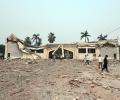
A former Pentagon official, Michael Rubin has said that India targeted terror infrastructure with precision, and it was able to blunt Pakistan's response following the recent strikes.

Following the precision strikes, India reached out to several world capitals and briefed senior officials about its anti-terror actions against Pakistan.

So, when to start, when to stop, how much to apply in terms of time, space and resources, and how much, what is the definition of calibrated action, all these things were something "we kept discussing at every time," Gen Dwivedi recalled.

The Indian Army has released a booklet on Operation Sindoor, which was launched to avenge the April 22 ghastly Pahalgam attack in which Pakistan-backed terrorists brutally killed 26 civilians, mostly tourists, and left many injured.
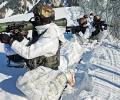
This was the third consecutive night that Pakistan resorted to unprovoked firing along the Line of Control.

Calling it a direct challenge to India's sovereignty, film director Vivek Ranjan Agnihotri said on Thursday that he declined an invitation by the Oxford Union and found the theme of the debate -- 'This House Believes in an Independent State of Kashmir' meaningless.

Players from Kolkata Knight Riders and Chennai Super Kings, along with BCCI officials, lined up along the boundary ropes at Eden Gardens to pay a heartfelt tribute to the Indian armed forces.
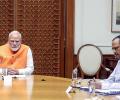
India's National Security Advisor Ajit Doval briefed US Secretary of State Marco Rubio on the country's missile strikes against nine terrorist targets in Pakistan. The strikes, dubbed "Operation Sindoor," targeted terrorist infrastructure in Pakistan and Pakistan-occupied Jammu and Kashmir. India stated that the strikes were measured, responsible, and non-escalatory in nature, targeting only known terror camps. The strikes followed a deadly attack on civilians in Jammu and Kashmir on April 22, for which India has accused Pakistan-based terrorists. The Indian government has cited credible leads, technical inputs, and survivor testimony as evidence of Pakistan's involvement in the attack.

The firing exchanges are taking places in five districts out of seven border districts of Jammu and Kashmir. So far, there has been no firing reports along International Border in Samba and Kathua districts.

The attack has "footprints and tracks" similar to previous attacks claimed by The Resistance Front, the ministry said in a presentation, adding the terror organisation is just another name of designated terror outfit Lashkar-e-Tayiba.

According to sources, India would be invited to the new proposed forum, while countries like Sri Lanka, Maldives, and Afghanistan are expected to be part of the grouping.
Pakistan's Deputy Prime Minister and Foreign Minister Ishaq Dar has warned India of a strong response, saying Pakistan will respond to a "brick with a stone" if India takes any action against Pakistan, amid heightened tensions following the April 22 terror attack in Jammu and Kashmir's Pahalgam. Dar alleged that India might have staged the Pahalgam attack to abolish the Indus Waters Treaty (IWT) and warned that any attempt by India to interfere with the treaty would be considered an act of war. He also said that Pakistan had no involvement in the Pahalgam incident and is getting support from countries like Saudi Arabia, China, the United Arab Emirates, the United Kingdom, Kuwait, Bahrain, and Hungary.

Terror groups are using online war games to communicate with recruits in Jammu and Kashmir, bypassing traditional social media channels, officials said.
